
Local search artificial intelligence is reshaping how customers find businesses, and the stakes have never been higher. Companies that don’t adapt to these changes won’t just fall behind; they’ll be algorithmically bypassed.
AI local search has transformed into a zero-click decision layer. AI Overviews now blend information from multiple sources to answer queries directly and change the local SERP landscape by a lot. Traditional optimization strategies are no longer enough.
I have created this step-by-step guide to help you dominate AI local search in 2026 and beyond. You’ll learn how to establish local enterprise authority and implement automated local SEO strategies. You’ll also track your visibility across AI-driven platforms.
What Is AI Local SEO and Why It Matters
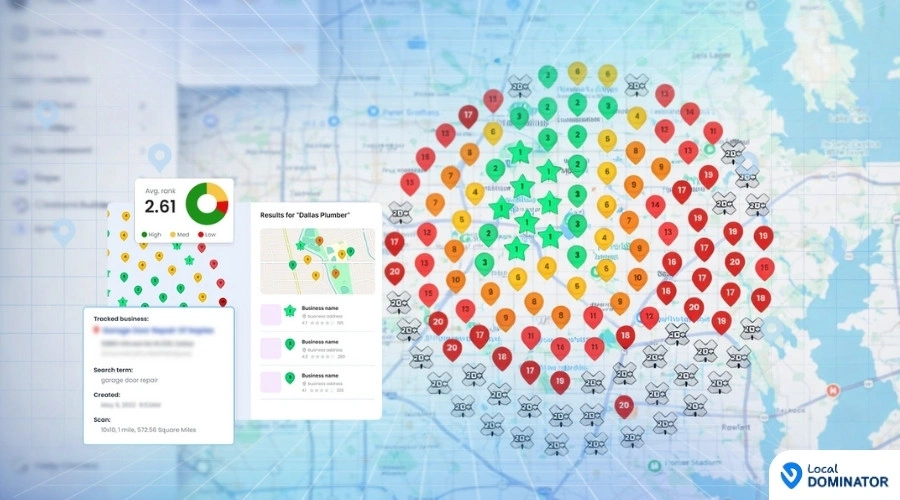
Image Source: Local Dominator.
AI local SEO represents the process of optimizing your business information so machine learning algorithms can interpret, reference and recommend your services with precision across search engines, large language models and AI-powered platforms. Traditional optimization targeted keyword rankings. AI local search now evaluates your business through entity relationships, semantic relevance and cross-platform data consistency.
Key Takeaways for Dominating Local Search with AI
- AI Overviews appeared for 68% of local searches, while local packs showed for only 39% of queries
- Getting included in AI recommendations is approximately 30X more difficult than appearing in the Google 3-Pack
- ChatGPT selects businesses with an average star rating of 4.3, higher than traditional measures
- Nearly 60% of searches now result in zero clicks because users get answers from AI-generated results directly
- Only 20% of Americans use AI tools 10+ times per month, while 95% continue using traditional search engines
How AI Local Search Algorithm Works in 2026
The local search algorithm in artificial intelligence operates through what we call the FACTS framework: Freshness, Authority, Consistency, Trust and Semantic Relevance. Ronnel Viloria, Lead SEO Strategist at Thrive Internet Marketing Agency, explains: “AI has transformed how search engines interpret user intent by analyzing context, location and behavioral signals to deliver more relevant and hyper-local results”.
Machine learning models now build sophisticated profiles that include demographic data, business ecosystem analysis and cultural characteristics. A Semrush analysis tracking over ten million keywords found that AI Overviews surged from 6.49% of queries in January 2025 to 24.61% in July, then stabilized at 15.69% by November. Commercial queries triggering AI Overviews grew from 8.15% to 18.57% during this period, which tells us more.
A Seer Interactive study revealed that organic click-through rates for queries with AI Overviews fell 61%, dropping from 1.76% to 0.61%. So your automated local seo strategy must account for reduced website traffic while maximizing AI citation opportunities.
The Move from Traditional to Automated Local SEO
Traditional local SEO focused on city-level rankings and isolated keywords. AI local seo prioritizes entity-based frameworks and cross-platform visibility. Tim Clarke, Senior Reputation Manager at Thrive Local, notes: “AI can save time and provide a strong first draft of review responses, but a human should still handle the final posting and edits”.
Ron Evan Del Rosario, Senior Link-Building Manager at Thrive, adds: “AI can automate many things. However, you should NEVER outsource your brand’s voice entirely. It’s best to think of AI as your research assistant, not your spokesperson”. This captures the balance required for local enterprise authority in 2026.
Step 1: Establish Data Consistency and Authority

Image Source: ALM Corp.
Data accuracy are the foundations of ai local search success. Search engines cross-reference your business details across dozens of platforms to verify legitimacy. Any inconsistency creates algorithmic confusion that suppresses your local serp visibility.
Audit and Synchronize Business Information Everywhere
Your NAP (name, address, phone number) must appear identically across every digital property. Google uses directories and listings to measure prominence, a key factor in its local search algorithm in artificial intelligence. Accuracy matters more than perfect consistency these days. Google understands that ‘St’ and ‘Street’ are equivalent, but the core information must be correct.
Start with Google Business Profile, then prioritize major directories like Bing Places, Yelp and Apple Maps. Even minor variations like ‘Street’ versus ‘St’ or inconsistent suite numbers create matching problems. Search engines lose confidence when they find conflicting details, which hurts your rankings and makes it harder for customers to find you. One study found that 71% of consumers had negative experiences because of incorrect local business information online.
Optimize Your Google Business Profile as Your Primary AI Source
Your GBP serves as AI’s grounding source. When Gemini or Google’s AI Overview answers local queries, your Google Business Profile is the primary source it trusts. Businesses including photos saw 45% more direction requests and 31% more website clicks. Also, 48% of local-intent searches led to GBP interaction within 24 hours.
Complete every field. If you don’t provide high-quality data, AI will hallucinate or pull information from unverified web sources and misrepresent your services.
Implement Advanced Schema Markup for Machine Readability
Structured data helps AI systems like ChatGPT deliver accurate information. LocalBusiness schema supplies everything in name, hours and services that AI platforms can combine smoothly. While schema isn’t a direct ranking signal, it boosts how search engines interpret your website and can fill gaps in unclaimed profiles. Sites utilizing schema markup experienced up to a 40% boost in click-through rates.
Step 2: Create AI-Optimized Local Content Strategy

Image Source: M&R Marketing.
Content strategy separates businesses that appear in AI results from those that get recommended. After you establish data consistency, you need content that AI systems can parse, understand and cite when answering local queries.
Identify High-Intent Local Keywords Using AI Tools
AI-powered SEO keyword tools analyze your market, location and niche to generate suggestions with commercial potential that are relevant to your area. Local Falcon’s WYN Score combines search volume for your location, commercial intent and trend data into a single metric ranging from 1 to 100. High-intent local keywords include service plus location modifiers with urgency triggers like “emergency plumber in Manchester” or “same day dentist appointment London”.
Write Content That Matches Conversational Search Patterns
Conversational search relies on natural language processing to understand context and intent. Structure content around how people ask questions using who, what, why and how formats. Front-load answers in 40-60 word snippets that AI can extract. Frame H2 and H3 tags as actual questions users ask.
Build Location-Specific Service Pages
Service area pages earn organic rankings for location-intent keywords even without physical storefronts. Make 40-60% of content unique and specific to each location to avoid doorway page penalties. Include service constraints for your area, seasonal conditions and operational specifics for each market.
Tap into Trapped Data from PDFs and Images
Google’s OCR reads exact text inside images and makes embedded keywords indexable. Text overlay in images reinforces relevance when Google extracts and indexes that content. Convert PDFs and scanned documents into searchable text to make hidden information accessible.
Step 3: Build Reputation and Monitor AI Visibility
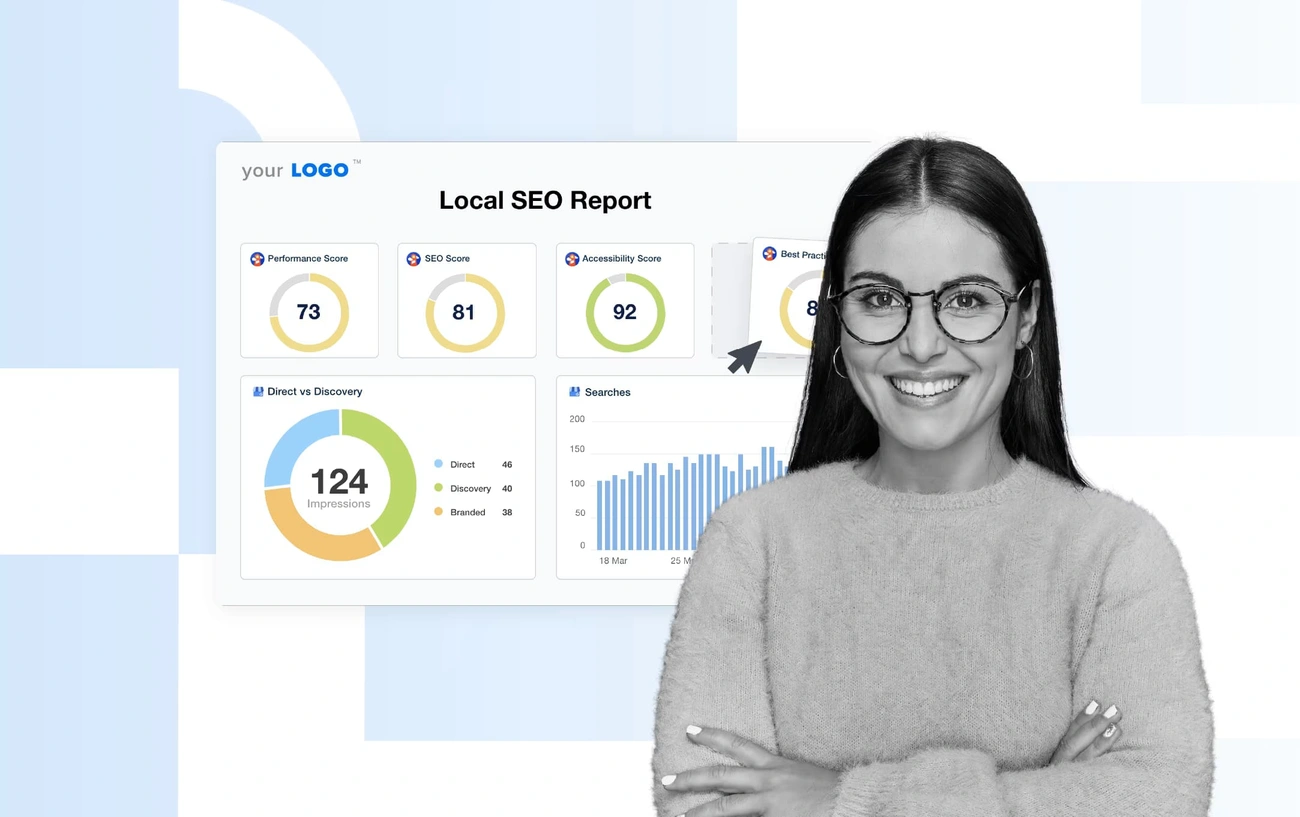
Image Source: Agency Analytics.
Reputation and visibility tracking determine whether your automated local seo investments generate actual business results. 99% of consumers read reviews when shopping online. Review management becomes your most direct influence on ai local search performance.
Generate Detailed Customer Reviews That AI Can Reference
Encourage customers to mention specific services, outcomes and experiences. AI systems assess content using E-E-A-T principles, with trust mattering most. Detailed reviews provide the sentiment data that AI platforms analyze when they make recommendations.
Respond to Reviews Using AI While You Retain Authenticity
88% of consumers are likely to choose a business that replies to all reviews. AI-generated responses can decrease time spent by up to 90%, but they require human oversight. Respond to negative feedback within 24-48 hours when possible. The acceptance rate for AI-generated responses reaches 92% without edits.
Track Your Business Across AI Platforms and Local SERP
AI visibility monitoring tracks how your brand appears when someone asks ChatGPT, Claude, Perplexity or Google Gemini a question. Traditional analytics can’t tell you what ChatGPT said about your company. Track your brand across multiple AI platforms since ChatGPT represents only one slice of the local search algorithm in the artificial intelligence landscape.
Measure What Matters: AI Visibility Metrics
Monitor brand mentions and citations across LLM platforms, share of voice against competitors and AI referral traffic in GA4. Track whether AI visibility improves your share of qualified enquiries rather than just counting mentions. AI visibility metrics should connect to actual business outcomes, not just dashboard numbers.
Let’s Round Up
You now have a complete roadmap to dominate local search artificial intelligence in 2026. The three-step framework we’ve covered gives you everything needed to establish authority, create AI-optimized content and track visibility across platforms.
AI local search continues evolving, but the fundamentals remain consistent. Focus on data accuracy and answer conversational queries with stellar reviews. Balance automation with authenticity above all. AI tools save time, yet your brand voice still needs human oversight.
Implement these strategies today. Your business will appear when AI answers local queries tomorrow.
Key Takeaways
AI is fundamentally reshaping local search, with businesses needing to optimize for machine learning algorithms rather than just traditional keyword rankings to stay competitive.
- Establish data consistency across all platforms – Your NAP (name, address, phone) must be identical everywhere, as AI cross-references multiple sources to verify business legitimacy and authority.
- Optimize your Google Business Profile as AI’s primary source – Complete every field since GBP serves as the trusted foundation that AI platforms like Gemini use when answering local queries.
- Create conversational content that AI can easily parse – Structure content around natural questions using who, what, why formats with 40-60 word answer snippets that AI can extract and cite.
- Generate detailed customer reviews for AI reference – Encourage specific service mentions and outcomes in reviews, as 99% of consumers read them and AI systems analyze this sentiment data for recommendations.
- Track AI visibility beyond traditional metrics – Monitor how your business appears across ChatGPT, Claude, and other AI platforms, since 68% of local searches now trigger AI Overviews instead of traditional results.
The shift from traditional local SEO to AI-optimized strategies isn’t optional—it’s essential for maintaining local search dominance as zero-click AI answers become the new norm for customer discovery.
FAQs
Q1. Is SEO becoming obsolete in 2026? No, SEO is not dying—it’s evolving. The fundamentals remain important, but the focus has shifted from traditional keyword rankings to optimizing for AI algorithms and machine learning systems that now power local search results.
Q2. What are the core fundamentals of SEO? The fundamentals of SEO can be summarized as The 3 Cs: content, code, and credibility. These elements work together to establish your online presence and help search engines understand and trust your business information.
Q3. What is the 10-20-70 rule for implementing AI in business? The 10-20-70 rule suggests that 10% of efforts should focus on algorithms, 20% on technology and data infrastructure, and 70%—the majority—on people and processes. This distribution ensures AI implementation balances technical capabilities with human oversight and organizational adaptation.
Q4. How has AI changed the way customers find local businesses? AI has transformed local search into a zero-click decision layer, where 68% of local searches now trigger AI Overviews that answer queries directly without users clicking through to websites. This means businesses must optimize for AI platforms to remain visible to potential customers.
Q5. Why is data consistency so important for local search visibility? AI systems cross-reference your business information across multiple platforms to verify legitimacy. When your name, address, and phone number (NAP) are inconsistent across directories, it creates algorithmic confusion that suppresses your visibility in local search results.


[…] Competitors win through specific advantages: Higher keyword rankings, faster site performance, stronger backlink profiles, comprehensive content strategies, and optimized local presence create measurable visibility gaps. […]